Configure settings for endpoint device protection and monitoring. These settings apply to devices on which the Coro Agent is installed.
To access device settings:
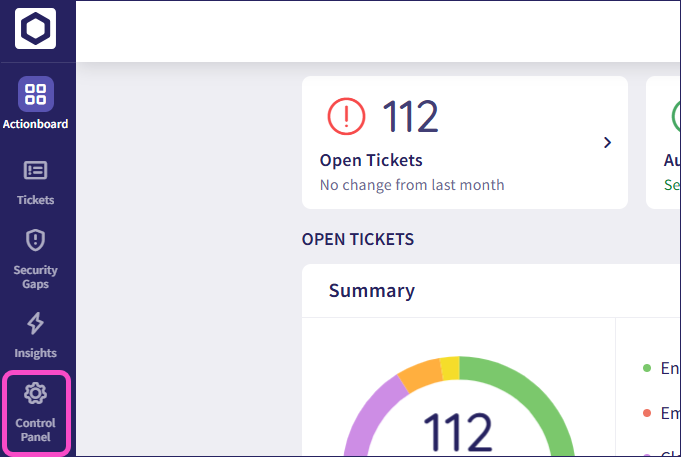
From the sidebar, select Control Panel:
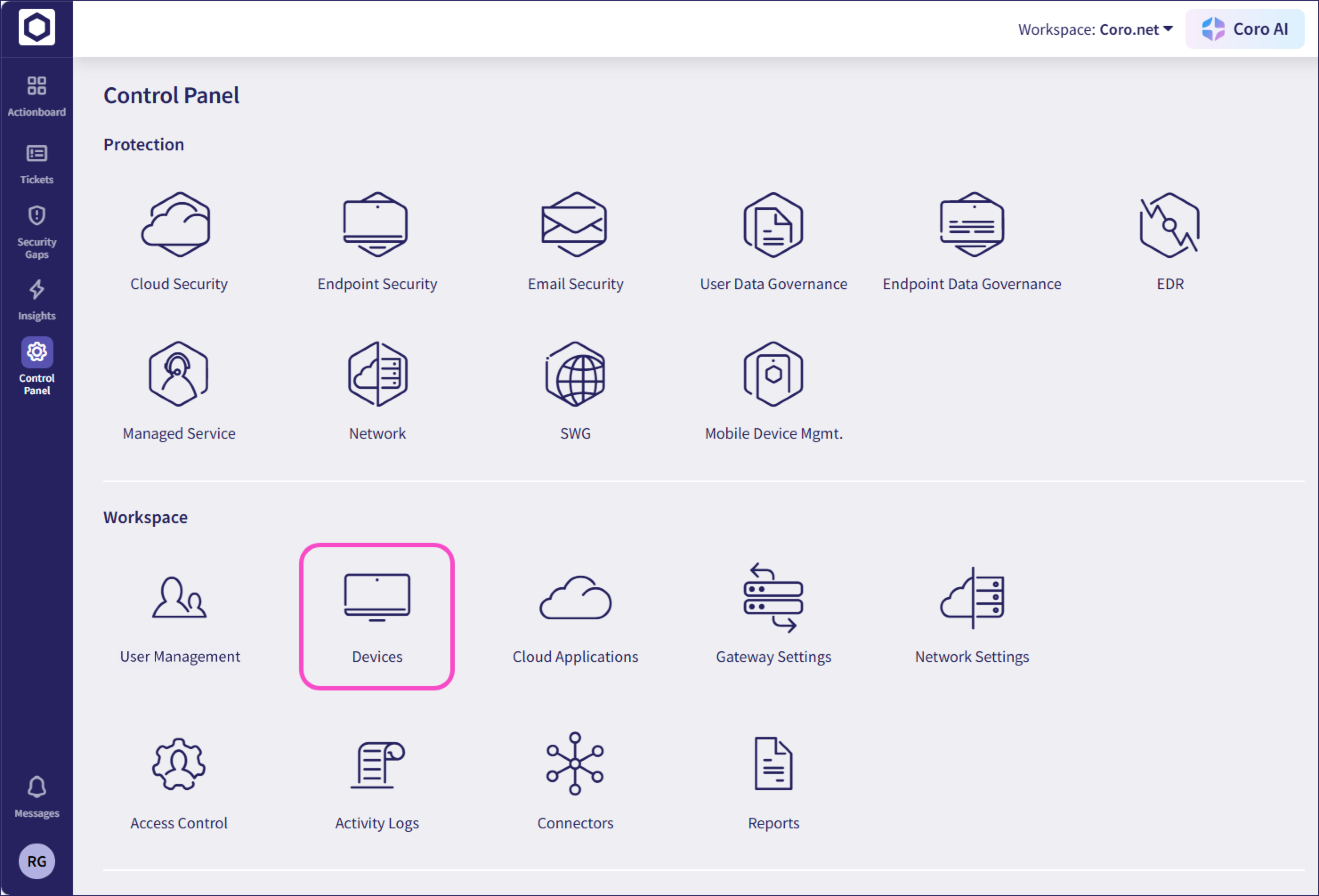
Select Devices:
Select Settings:
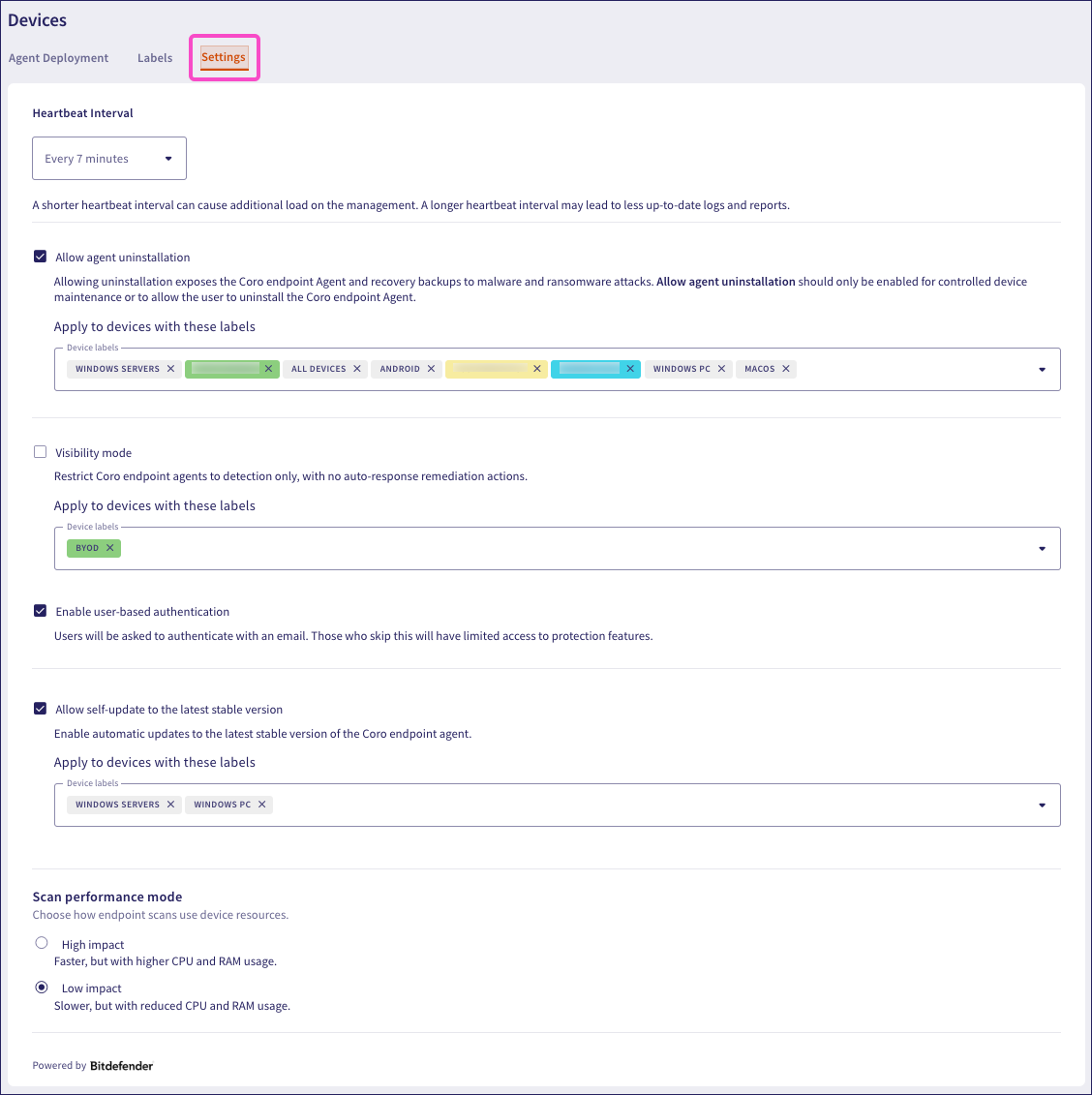
From this screen, add device labels (where shown) for protection settings to apply to specific groups of devices.
Coro includes the following device settings:
This setting describes how frequently the Coro Agent on endpoint devices communicates with the Coro service. For example, Every minute indicates that the Agent sends one heartbeat signal to Coro every minute.
The data transmitted during the heartbeat is minimal and is designed to keep the Agent and Coro connected, ensuring stable communication and timely updates. However, there is a trade-off. Shorter intervals can increase management workload, while a longer interval can mean logs and reports are less current.
Coro recommends choosing a heartbeat interval value that provides the best compromise based on your system requirements, network capacity, and the level of real-time updates desired.
Select a value from the Heartbeat Interval dropdown to set the heartbeat interval:
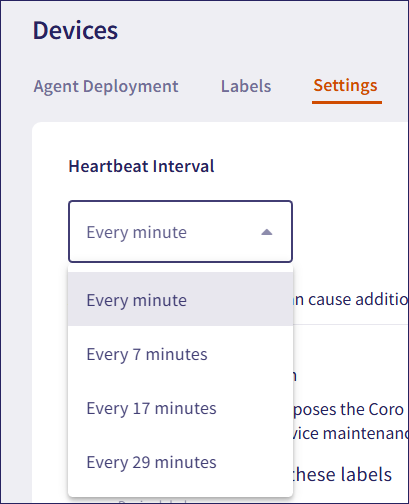
The options include:
Every minute
Every 7 minutes
Every 17 minutes
Every 29 minutes
Allow agent uninstallation must only be enabled when uninstalling the Coro Agent from Windows devices.
After uninstalling the Coro Agent from a Windows device, an admin user must disable this option to prevent further uninstallations on other Windows devices.
Uninstalling the Coro Agent may expose your devices to malware, ransomware, and other security risks.
When enabled, admin users with sufficient permissions can add device labels so that the Coro Agent can be uninstalled from Windows devices. Allow agent uninstallation is disabled by default.
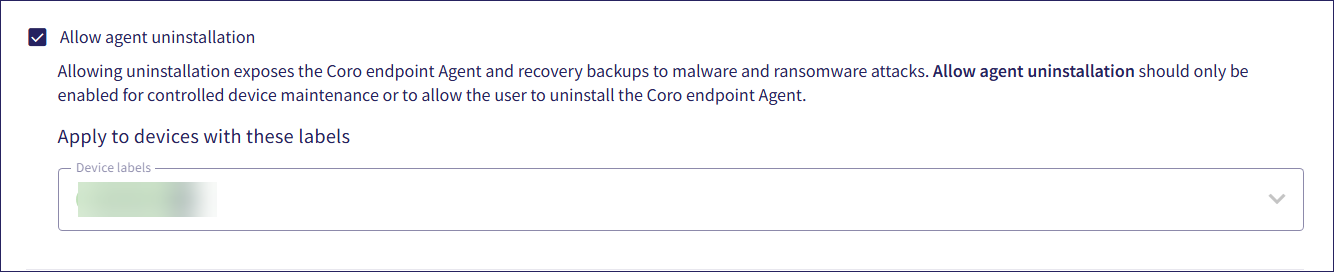
If you are planning a mass deployment or a direct upgrade, you must enable Allow agent uninstallation in your workspace and add device labels before downloading and installing the latest Agent version to your devices.
This setting only applies to Windows devices.
When enabled, the Coro Agent generates events and sends notifications to end users, but no automatic remediation (such as quarantine or process kill) is performed. Apply device labels of devices for which visibility mode should apply:

This setting applies to Android, iOS, macOS, and Windows devices.
User-based authentication verifies the identity of the protected user on each device. When enabled in the Coro console, the Coro Agent prompts users to enter and verify their email address. This links the device to the user, allowing Coro to apply user labels.
This setting applies to macOS and Windows devices.
When enabled, Coro automatically updates the Agent on all specified devices to the latest stable version.
You must add at least one device label, and the label must have devices associated with it. Coro recommends adding the predefined label ALL DEVICES to ensure complete coverage.
You can check label and device associations on the Device labels page.

This setting applies to macOS and Windows devices, and requires Coro Agent v3.8.7 or later.
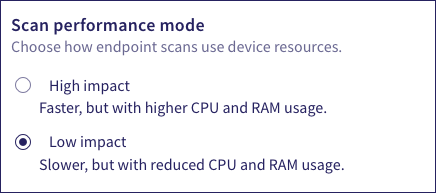
Set a limit on the system resources Coro is allowed to consume during a malware or sensitive data endpoint scan.
Overall scan quality is unaffected by either option, and this setting only affects the amount of system resources (CPU and RAM) Coro can use to complete the scan cycle. Admin users can choose the approach that best suits their requirements.
Choose from:
- High impact: A device scan uses more system resources per cycle and has a higher potential impact on device performance, but results in a faster scan.
- Low impact: A device scan uses fewer system resources per cycle and has less impact on device performance, but can take longer to complete.